

The narrative of redemption and God’s covenant with Abraham serves as the foundation for the story of Jacob in Genesis 25:9-37:1. The Lord God made an unconditional promise to Abraham regarding descendants, land, and a great name. This covenant promise was subsequently passed down to his son Isaac (see Genesis 26:1-5) and later to his grandson Jacob (see Genesis 28:13-14).
God’s grace
The book of Genesis was written by Moses for the Israelites during their time in the wilderness. Since Jacob was their ancestor, his life story held great significance for them. Moses showed that although Jacob did not merit God’s favor, God graciously chose him as the heir to the covenant promises, declaring to Rebekah that her son Esau would serve his brother Jacob (Genesis 25:23). God’s grace is also evident in His willingness to overlook Jacob’s sins, such as when Jacob deceitfully obtained the patriarchal blessing (Genesis 27:18–19). Indeed, God’s grace was abundantly displayed in Jacob’s life.
God’s care
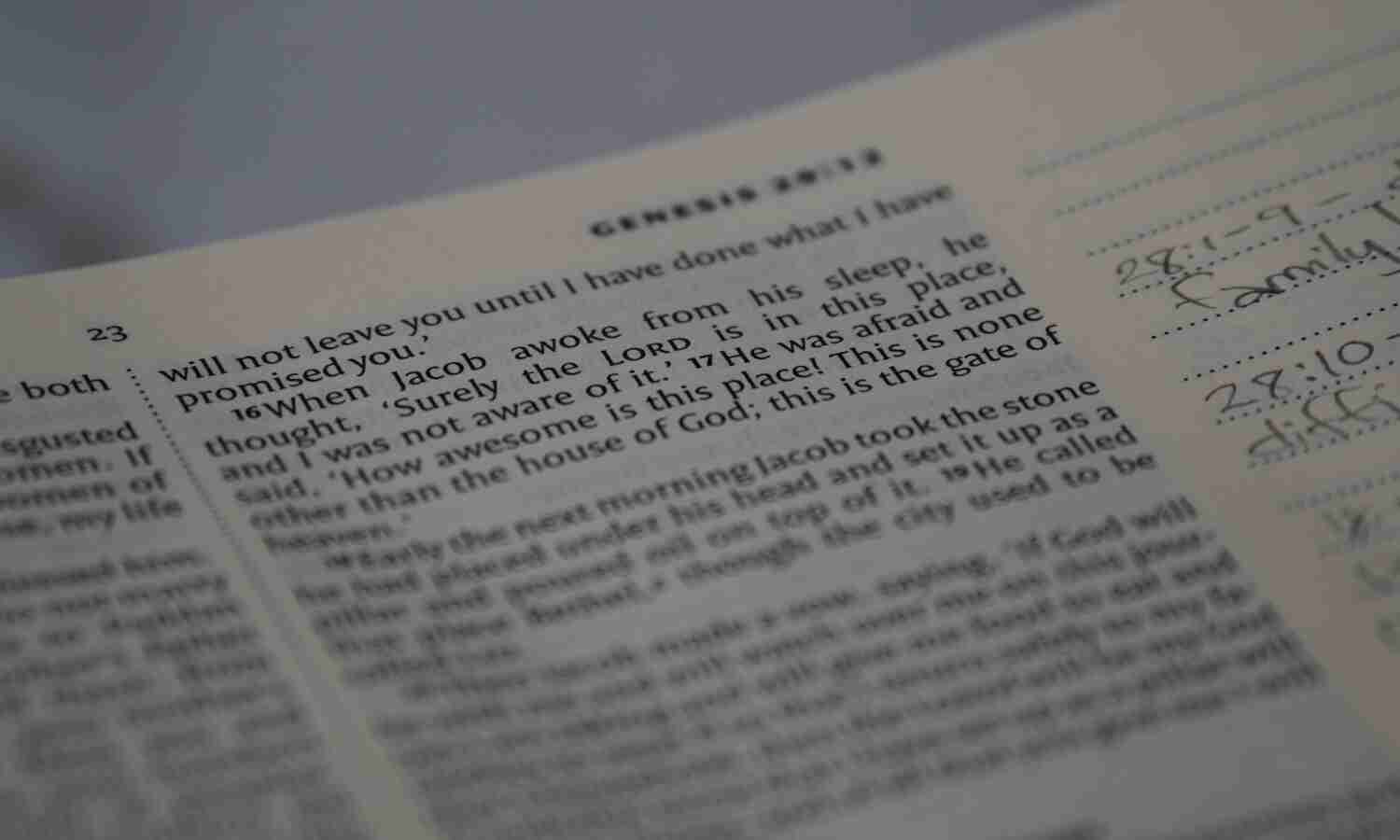
Jacob deceived his father Isaac by disguising himself as Esau, the family’s firstborn. As a result, Jacob received the blessing traditionally reserved for the eldest son. When Esau discovered the deception, he intended to kill Jacob, forcing Jacob to flee. Yet even within this painful episode, God’s care for Jacob is evident. God appeared to him in a dream and promised to be with him, to protect him wherever he went, and to bring him back to the land of Canaan (Genesis 28:15). Without excusing Jacob’s sin, God faithfully guarded his steps. He led Jacob safely to his mother’s relatives, where Jacob married his cousins Leah and Rachel. God then blessed him with many children and abundant material prosperity.
Although this prosperity came by God’s sovereign design, Jacob attempted to secure it through superstitious practices (Genesis 30:38). Nevertheless, God’s providence remained at work on his behalf. The Israelites were meant to see themselves in Jacob’s story and recognize that they too were under God’s care, even as they journeyed through the desert toward Canaan.
In God’s time, we come to Him
After several confrontations with his father-in-law, Jacob resolved to return to Canaan. Yet he feared the inevitable encounter with Esau, whom he believed would kill him. In this atmosphere of fear, God began to draw Jacob into a deeper relationship with Himself. During the night, a man came and wrestled with Jacob—this man was God Himself. God changed Jacob’s name to Israel, meaning “he struggles with God” (Genesis 32:28). Through this act, Jacob was reminded of his lifelong struggle with the Lord and, at the same time, of the sustaining grace that had upheld him throughout his life.
Following his reconciliation with Esau (Genesis 33:4), Jacob acknowledged that God had been present with him in all his distress. He then chose to remove the foreign gods he had carried with him, demonstrating his surrender to the Lord alone (Genesis 35:1–3). In God’s perfect timing, and under His sovereign guidance, Jacob was brought to Him.
All of this—God’s grace, care, and calling in Jacob’s life—testifies to God’s faithfulness to the covenant He made with Abraham, reaffirmed with Isaac and Jacob. That covenant ultimately pointed forward to the New Covenant, a covenant of grace that saves sinners like Jacob. Through Christ alone, we now receive abundant grace, divine care, and spiritual blessings far greater than any material prosperity.