
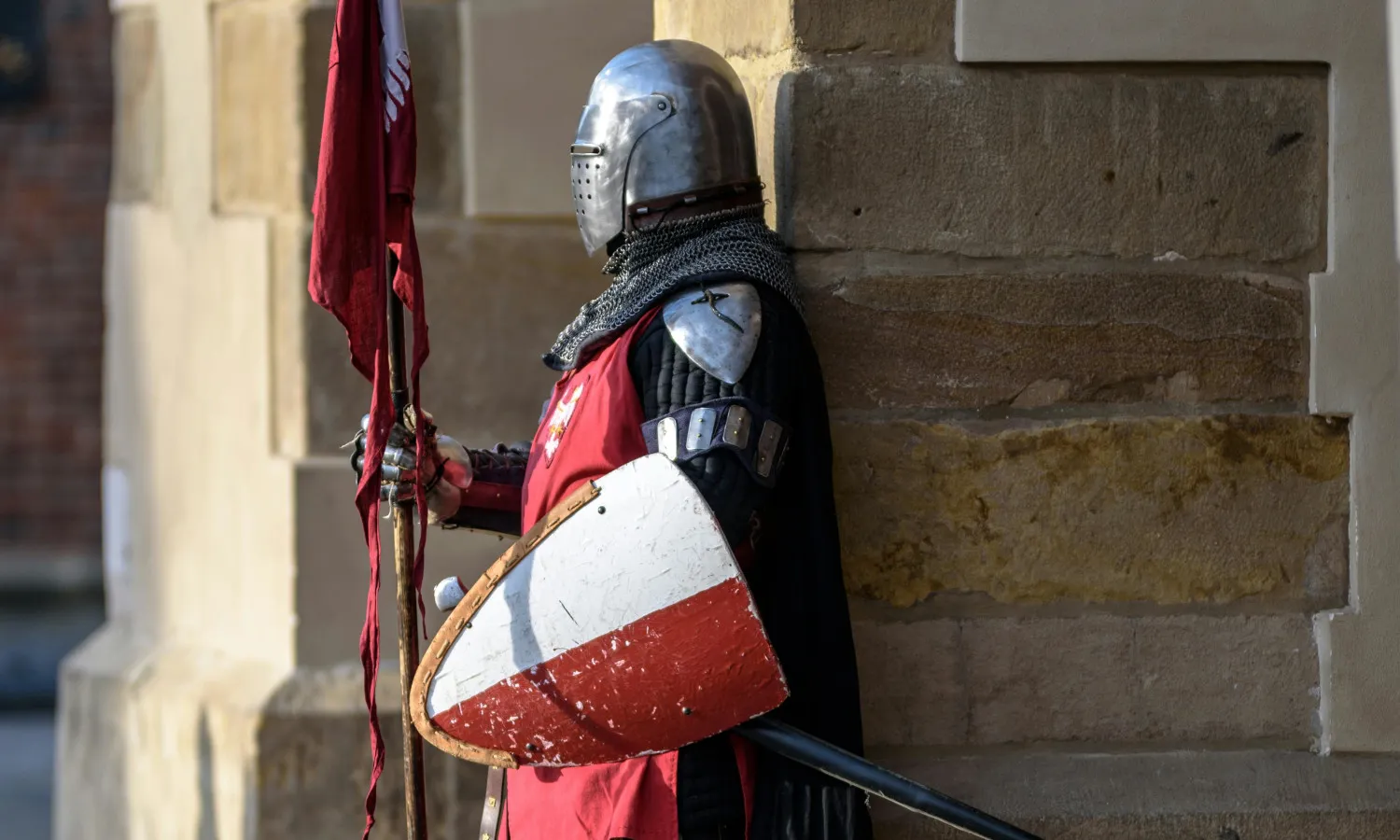

When Jesus and the disciples were in the Garden of Gethsemane on that fateful final night, and the priests and elders arrived to arrest Jesus, the Apostle Peter drew a sword to strike the high priest’s slave. As a result, the slave (temporarily) lost his right ear (John 18:10). Jesus’s response is intriguing: He instantly heals the wound but refrains from condemning Peter’s action, issuing a warning about ‘perishing by the sword’, instead. And why did Peter carry a sword, in the first place?
What is self-defense?
Before we get carried away by the presence of Peter’s sword, let’s determine the meaning of ‘self-defense’. Self-defense refers to the action of responding to a verbal or physical attack by an assailant who is saying or doing something ‘to your detriment’. Which means: they are insulting you with the things they say, or physically harming you with the things they do, and you want to take action to stop this, i.e. defend yourself.
Self-defense is about the moment itself; it’s about your immediate response. If you leave it for a week, a day, or even an hour to retaliate, be very careful to distinguish between self-defense and revenge. Because about that, the Lord says: “Vengeance is Mine” (Deuteronomy 32:35).
The Apostle Paul reminds us of this in Romans 12:19-21, and adds some valuable advice: “if your enemy is hungry, feed him; if he is thirsty, give him something to drink; for by so doing you will heap burning coals on his head. Do not be overcome by evil, but overcome evil with good.”
What Would Jesus Do?
During the Sermon on the Mount, Jesus said: “Do not resist the one who is evil. But if anyone slaps you on the right cheek, turn to him the other also. And if anyone would sue you and take your tunic, let him have your cloak as well” (Matthew 5:39-40).
Ultimately, this is what Jesus did, Himself.
When they took Him to ‘stand trial’, He was beaten and insulted and they took His clothes, and He never tried to stop them.
Strictly speaking, if we do not hit back when someone slaps us, and if we are happy for them to take our cloak, we do exactly ‘what Jesus would have done’.
But do we HAVE to do what Jesus did? Are we not allowed any alternatives? Suppose we let this person have our cloak, but slap them in the face, first…..?
Is it allowed to defend yourself?
As Christians, we can almost feel the Holy Spirit beginning to pick apart the above scenario. ‘Really…….? Are you really going to slap someone on the cheek….? Even if it is allowed…..?’
Luke 6:27-28 tells us: “Love your enemies, do good to those who hate you, bless those who curse you, pray for those who mistreat you.”
Ouch. That doesn’t leave much room for assertive action, does it….?
But ‘defense’ suggests an attack, and attacks can happen quite suddenly. You may not have much time to consider your options. Furthermore, you may be responsible for the safety of someone in your immediate vicinity: a child, your elderly parent. What if you’re under attack, verbal or physically, and have to make a split-second decision? Is it allowed to call the other person names? Physically ‘intervene’ with some pushing and shoving? Hit someone….? There are no verses in Scripture suggesting that it is (allowed), whereas we do have verses – from Jesus! – suggesting that it may not be. So…..?
Why would you defend yourself – verbally or physically?
Luke 6:27-28 is quite clear about verbal attacks: if someone or people express hatred towards you, or curse you: be strong. Draw your strength from the Lord (Ephesians 6:20). Do not respond with more hatred, but love this person and pray for these people. That is actually a very powerful defense!
Remember Paul’s advice: “Do not be overcome by evil, but overcome evil with good.”
If you defend yourself with similar verbal abuse or hatred, there is definitely the risk that you will be overcome by evil – which is worse than the abuse you were experiencing. So, make sure you defend yourself against our spiritual enemy by doing good.
In the case of a physical attack, you always have the option of not defending yourself.
But what if someone is threatening to hurt your child or parent? Is it not your responsibility to keep your child safe? And the 5th Commandment says you must honor your parents, so protecting them seems a no-brainer. The Old Testament even has a verse suggesting that if a homeowner defends their home against a person illegally entering it, the homeowner will not be punished if the intruder accidentally dies as the result of the defensive action (Exodus 22:2).
…But before you interpret this as permission to strike back…
Please remember that Exodus 22 was in Old Testament times. Ever since Jesus’s sacrifice on the cross, a Christian homeowner for example, will need to consider that if, in the very worst-case scenario, a burglar dies because they, the homeowner(s), have killed this person in order to defend their home, they will rob this person of the chance to repent and find faith in Jesus Christ. That is an extremely severe responsibility, even though the burglar is at fault!
Still: what if there’s an instant physical threat to you or your loved one?
As mentioned above, the Apostle Peter was carrying a sword in Gethsemane. This was – presumably – because in Luke 22:26, Jesus had told His disciples to get a sword.
And as it turned out, they already had two swords that Jesus hadn’t previously objected to.
Jesus wasn’t suggesting they buy swords for food preparation or as an investment: He was seriously considering the possibility that the disciples might find themselves in danger and would need to defend themselves.
Because of this we must conclude: defending yourself is not prohibited. But keep Jesus’ warning in mind. If you draw the sword, you might die by the sword. And think twice about how far you need to go to defend yourself. If ‘good’ can be done to prevent ‘evil’, do ‘good’.
Read more
This article about self-defense in the personal context may leave you with some questions about self-defense as a nation, or about the use of violence by armies. These questions are discussed in a separate article: Can Christians join the military?