
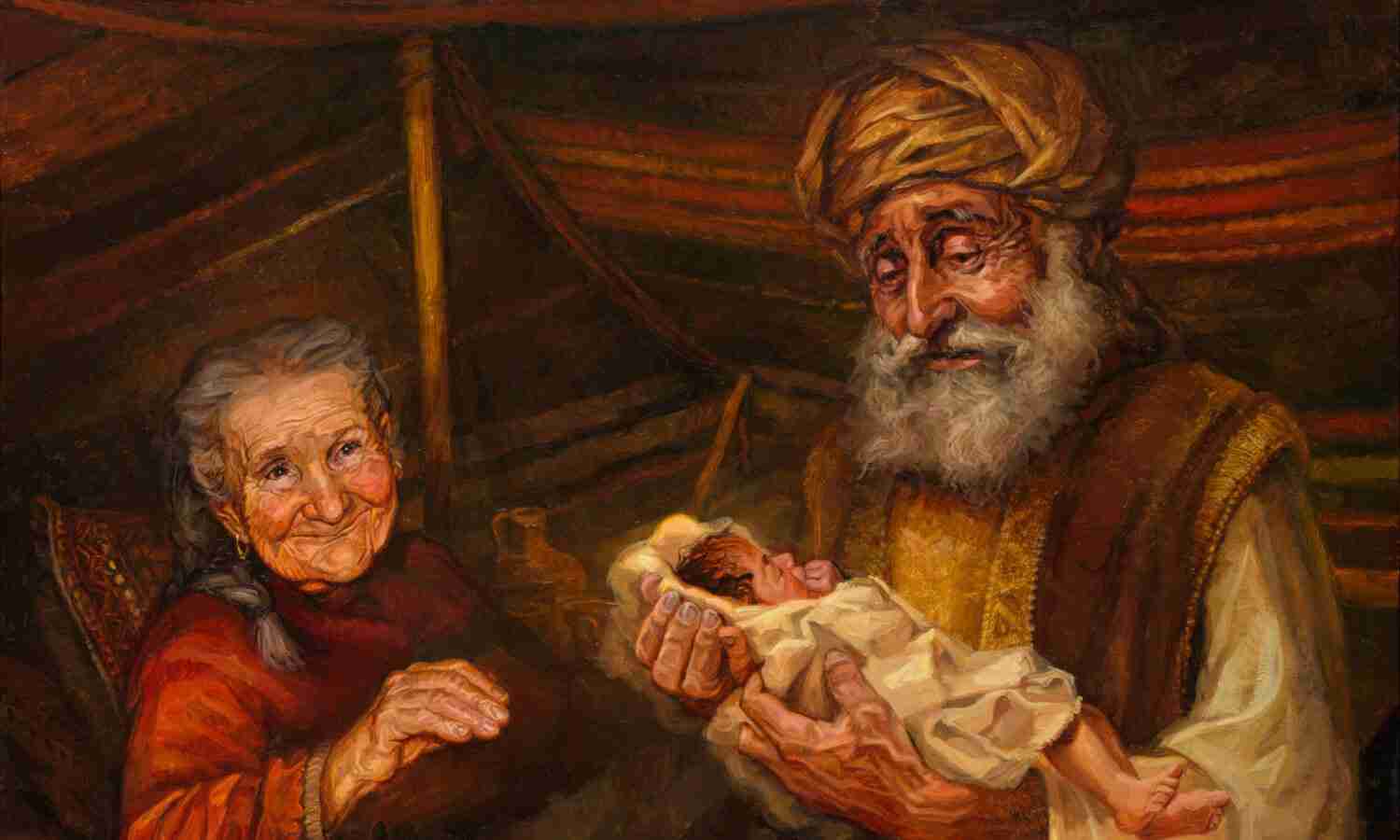

Sarah (or Sarai as she was called originally) is mentioned often in the Bible, predominantly in the book of Genesis. But there are a few references to her in the New Testament too.
Historical context
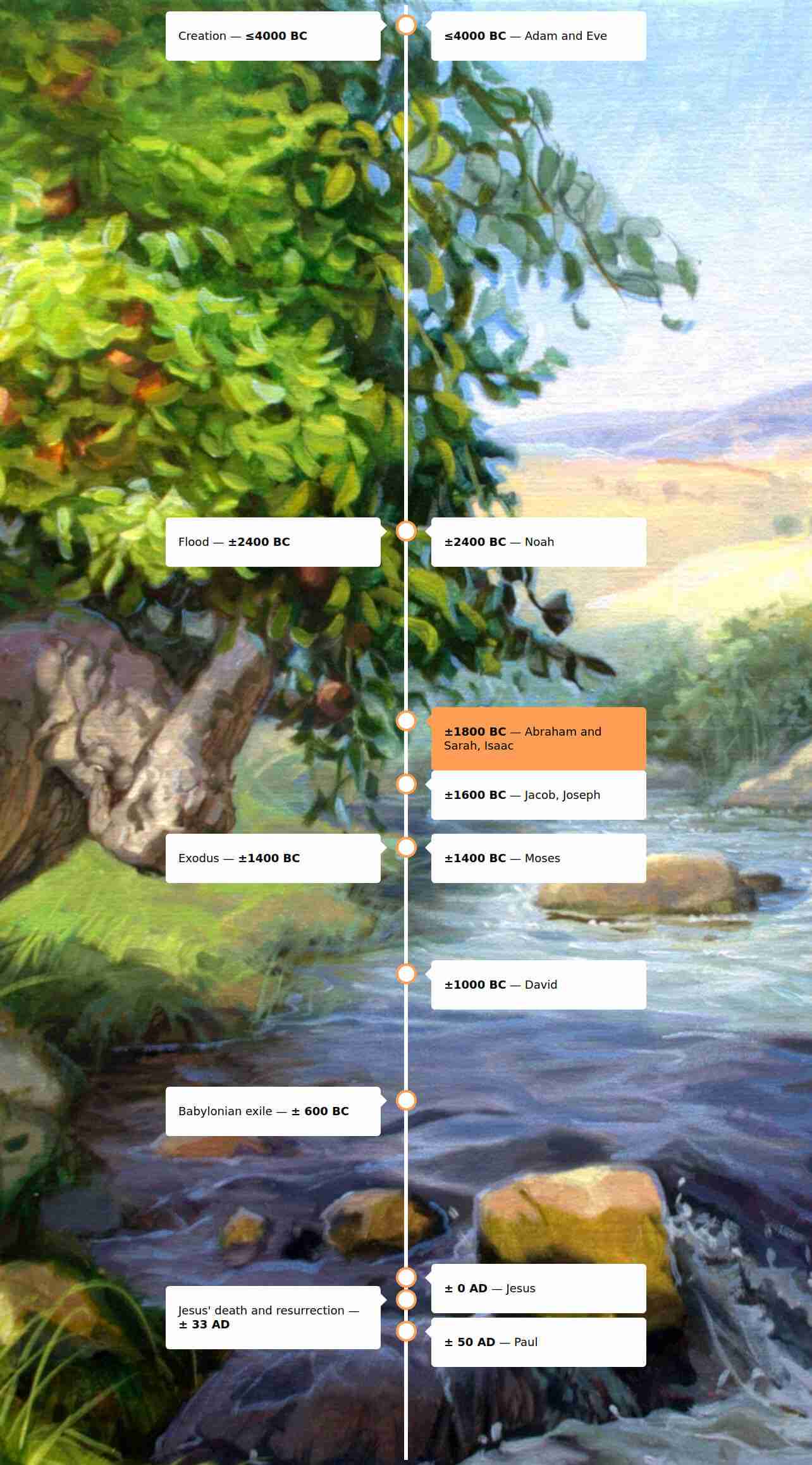
Sarai was born around 1800 BC (see timeline). Her name means “princess” and is first mentioned in the Bible in Genesis chapter 12. This is when we are introduced to her husband, Abram (later Abraham). God had planned that Abram would be the father of the Jewish nation through Sarai. But at the point that God called Abram, they had no children.
Sarah’s life
Abram was 75 years old when God instructed him to depart from Haran and journey to the land that He would reveal to him, which was Canaan. At that time, Sarai was 65, being ten years younger than Abram. She had no children, a circumstance that brought shame and embarrassment during that era, often leading to mockery or disdain from other women.
Even at the age of 65, Sarai was clearly still very beautiful. On at least two occasions, Abram requested that she identify as his sister instead of his wife, to protect him from being harmed or mistreated by local men due to his relationship with her. (Genesis 12:10-20, Genesis 20:1-18)
Even in this small picture of Sarai’s life we can see that she was obedient and submissive to her husband even though it endangered her life or put her in vulnerable situations. On the two occasions mentioned, God intervened on behalf of Sarai and brought Abram’s lie into the open so that Sarai was protected from being violated by men who may have had designs on her.
Sarai must have known of of the promise God had given to Abram, yet she recognized that bearing a child herself no longer seemed humanly possible. In an effort to assist Abram and fulfill the promise, she offered him her servant as a surrogate wife, hoping to build a family through her (Genesis 16). However, when the servant, Hagar, discovered that she was pregnant, she began to look down on Sarai, whose continued barrenness only deepened her shame, humiliation, and sense of inadequacy.
Sarah eventually had a child
Sarai waited a total of twenty-five years for God’s promise of a child to be fulfilled. By the time it was realized, she was ninety years old. During this period, God changed her name to Sarah and Abram’s name to Abraham, meaning “father of many nations.”
The year before Sarah gave birth, several visitors came to Abraham. While Sarah was at the entrance of the tent preparing bread, she listened to their conversation. The visitors told Abraham that Sarah would give birth to a son at the same time the following year. Hearing this, Sarah laughed to herself, knowing that such a thing seemed humanly impossible. The visitors then asked, “Is anything too hard for the LORD?” Exactly one year later, Sarah gave birth to a son, whom they named Isaac as God had instructed. Fittingly, the name Isaac means “laughter.”
As Isaac grew older, the presence of Ishmael, Hagar’s son, became a source of conflict. When Sarah observed Ishmael mocking or mistreating Isaac, it stirred up past feelings of jealousy and hurt connected to Hagar and her son. Concerned that Ishmael might share in Isaac’s inheritance, Sarah insisted that Abraham send Hagar and Ishmael away.
Little is recorded about Sarah’s life after this event. Scripture tells us that she died at the age of 127, when Isaac was about thirty-seven years old. Abraham then approached the local people to purchase a burial place for his wife and bought the cave of Machpelah from Ephron the Hittite. Abraham himself was later buried there as well.
Sarah in the New Testament
- 1 Peter 3:6 – Sarah is praised for her obedience to her husband.
- Hebrews 11:11 – she is praised for her faith.
- Galatians 4 – the apostle Paul uses Sarah and Hagar as symbolic examples of freedom and slavery. He explains that those who belong to the Lord are likened to the children of Sarah—children of the promise. Through Christ, we are born into freedom rather than bondage, no longer slaves but heirs of God’s promise.
- Romans 4:19-22 says that Abraham’s faith was rewarded. Even though he was old, and Sarah’s womb was barren (or “dead”), he believed in God’s promise.
Jesus Christ came through Abraham and Sarah
All the promises that God gave to Abraham come to fulfillment through Sarah’s son Isaac. “I will make you into a great nation and I will bless you; I will make your name great and you will be a blessing. I will bless those who bless you and whoever curses you I will curse; and all people on earth will be blessed through you” (Genesis 12:2-3).
The promise that “all people on earth will be blessed through you” was fulfilled through the coming of Christ, who died for us so that we might receive salvation. As a result, people from all over the world have become members of God’s family and continue to experience His blessing.
Some lessons for us
Nothing is impossible with God. Sarah must initially have felt great excitement when Abraham first received the promise of a son from the Lord. Yet as the years passed, she may have felt disappointed, even wondering whether she had been misled or whether the promise was becoming less likely with time. When we believe God has promised something to us, we are called to hold firmly to it.
When God makes a promise, He is faithful to fulfill it—but not according to our timetable. We must cling to the promises found in His Word and trust that He will bring them.
In humility, Sarah obeyed her husband, even when doing so placed her life and purity at risk. Likewise, God calls us to submit to Him and to those in authority over us. At times, those in leadership may make mistakes that bring difficulty or hardship into our lives. Even so, God is always watching over His people and is able to provide protection and deliverance, just as He did for Sarah.
God never promised His people an easy life. We may face persecution, injustice, bullying, danger, or fear. Yet for those who place their trust in God, there remains the sure promise of His blessing—even when its fulfillment is delayed.
Thanks to Gospelimages for the painting.